Marble Falls, Texas – Community Retail Dashboard
Powered by The Retail Coach
Powered by The Retail Coach
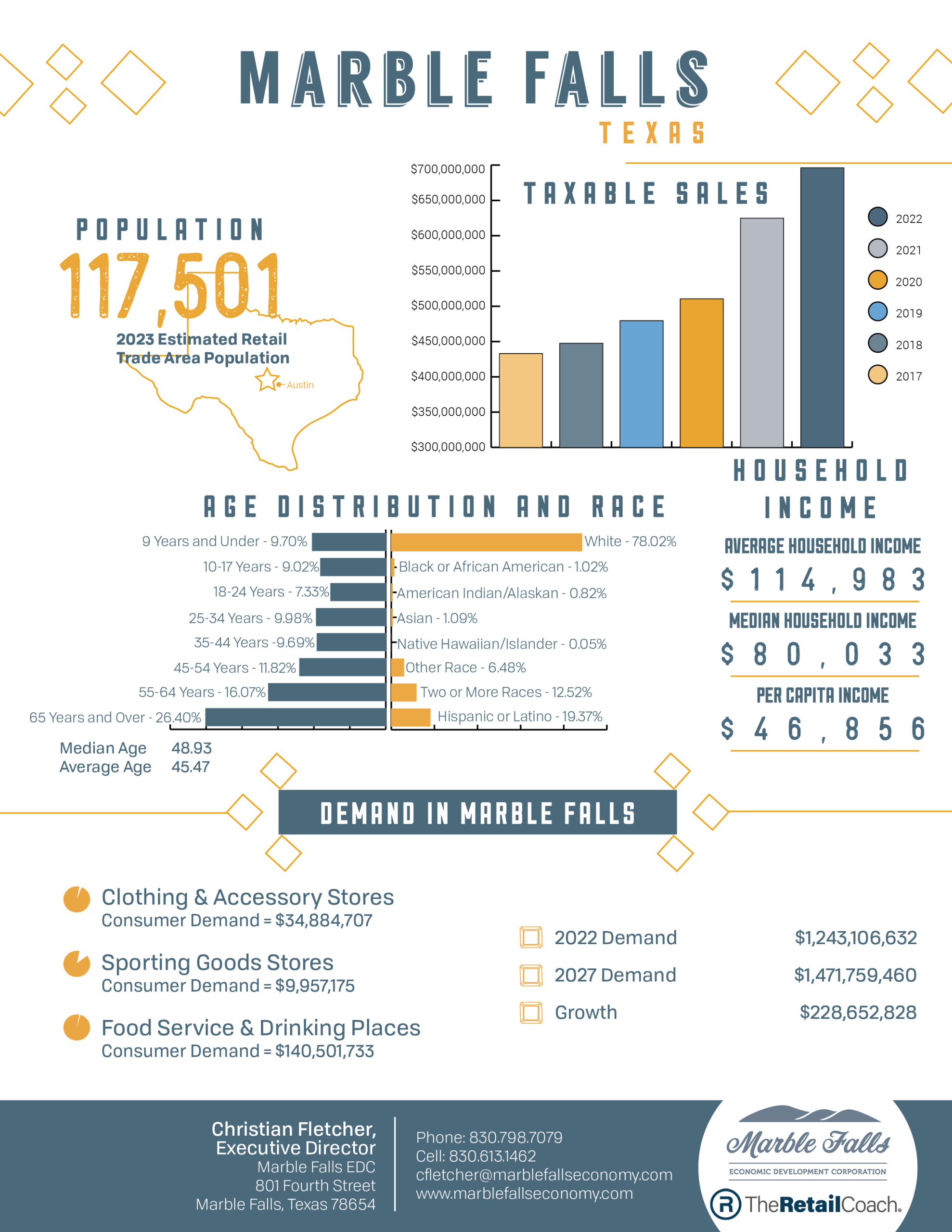
TOTAL RETAIL LEAKAGE
Average Household
Median Household
Median Age
Average Age
Some College or Higher
Data Source
February 2023. All information furnished is from sources deemed reliable and is submitted subject to errors, omissions, change of terms and/or conditions. Prepared by The Retail Coach, LLC, a national retail consulting and market research firm. 800.851.0962.
This thematic map allows the visual representation of demographic and psychographic data.
INSTRUCTIONS:
To explore the data select the icon layer from the main menu. Select the layer data you wish to review. Click anywhere on the map for more details down to the block level. Alternatively use the up and down arrows within the right hand dialog box to display additional features. Click the button below the map to view in full sized window (recommended).
All documents are in PDF format and will open in a new tab.
Marble Falls, Texas | Retail Trade Area Flyer
Marble Falls, Texas | Community Demographics
Marble Falls, Texas | Retail Trade Area Demographics
Marble Falls, Texas | Retail Trade Area Psychographics
Marble Falls, Texas | Retail Trade Area Retail Market Profile
Marble Falls, Texas | Retail Trade Area Retail Demand Outlook
Christian Fletcher, Executive Director
Marble Falls Economic Development Corporation
801 Fourth Street
Marble Falls, Texas 78654
Phone 830.798.7079
Cell 830.613.1462